Showing posts sorted by relevance for query umbrella. Sort by date Show all posts

Friday, May 20, 2022

Thailand Days 11 - 12: Chiang Mai

I learned today that a few students have been sharing this blog with members of their family. I hope you've found the updates helpful! Shoutout to Kamiya's grandma--thanks for reading :)

If you read the last post and were bummed that there were no pictures to accompany my description of Sukhothai history and architecture, I've updated that post (link) with pictures, so check it out.

We made it to Chiang Mai!

I'm writing this post from the balcony of my hotel room. It's a great spot from which to people watch and to soak up the sights and sounds of city life. Like the other locations we've visited, Chiang Mai is also feeling the effects of reduced tourism and pedestrian traffic, so the streets, restaurants, and markets are noticeably more quiet than the pre-COVID times...

I'm pretty excited about my balcony

Night view of Chiang Mai city life

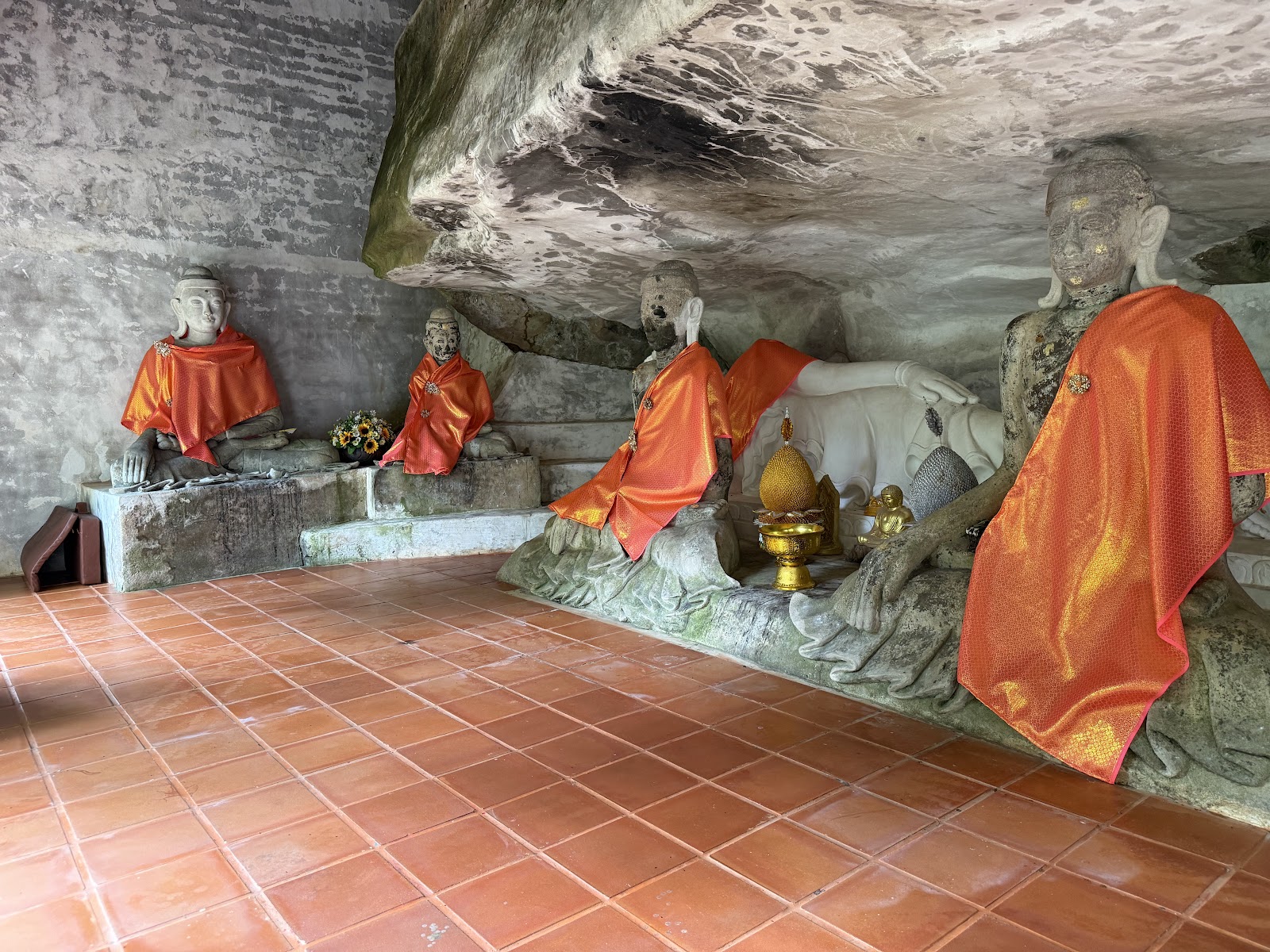
I should back up a little bit. On our way to Chiang Mai yesterday, one of our van drivers recommended a slight detour to visit Wat Thung Saliam, a Buddhist temple on the outskirts of Sukhothai (en route to Chiang Mai).

I'm going to do my best to paraphrase/interpret some history from Thailand's Directory of Tourism as the English translation is a little spotty:

Luang Pho Sila, a Buddha image, was originally enshrined in Chao Ram Cave, home to many bat colonies. Villagers went into the cave in search of bat droppings (guano is used in a lot of homeopathic treatments) and found the stone image. The villagers told Phra Aphai, the abbot of Thung Saliam Temple, and discussed bringing the image from the cave to the temple. As a result of the abbot's old age, they did not enshrine the Buddhan in Thung Saliam. Kruba Kuan, the abbot of a neighboring temple, heard of the rumor and summoned villagers to the cave. In the cave, he found the Buddha image while many bats were flying around. Kruba Kuan brought the Buddha out of the cave some time between 1929-1932. The journey back was full of hardship. Then a miracle happened; clear skies emerged after heavy clouds and rain, and a flock of bats overed over the Wat Thung Saliam before returning to the Chao Ram cave. The villagers would not allow the Buddha structure to be summoned back to Lampang, instead agreeing that the Buddha should remain enshrined at Wat Thung Saliam. The Buddha was replicated fr the Mae Pa Luane temple (where Kruba Kuan was abbot), and it was stolen in 1977. It was eventually tracked down through an art exhibit in London, and in 1996 it was returned to Thailand. 

I might have really botched that interpretation. Sorry!

View of the Wat grounds

One of the temple buildings

View of architecture at Wat Thung Saliam

Students in front of the building housing the Golden Buddha

Temple history (also from website--not paraphrased):

Wat Thung Saliam is one of the holiest Buddha temples in the Sukhothai. The atmosphere of this temple is absolutely peaceful, is the place which enshrined Stone Buddharupa or Luang Por Sila which is made of white sandstone with khmer art style in Angkorian period which influences architecture in Angkor Wat- Lopburi, was built in 11th century - 12th century. Buddharupa has 86 centimeters height and lap width at 43 centimeters, there are numerous tourists come to worship Luang Por Sila.

While we were at the temple, Noi explained how we could individually make a donation to the temple and take a candle and bouquet to offer to the Buddha as a request for a blessing. Students and faculty selected a candle that corresponded with the day of their birth (Sunday, Monday, Tuesday...) and then we had an opportunity to make our offering. What an awesome experience.

Students and faculty discussing Buddhist practices

You might need to open this image in a separate browser to be able to read it, but it gives the history of the Golden Buddha

Making an offering to the Buddha (I was born on a Wednesday)

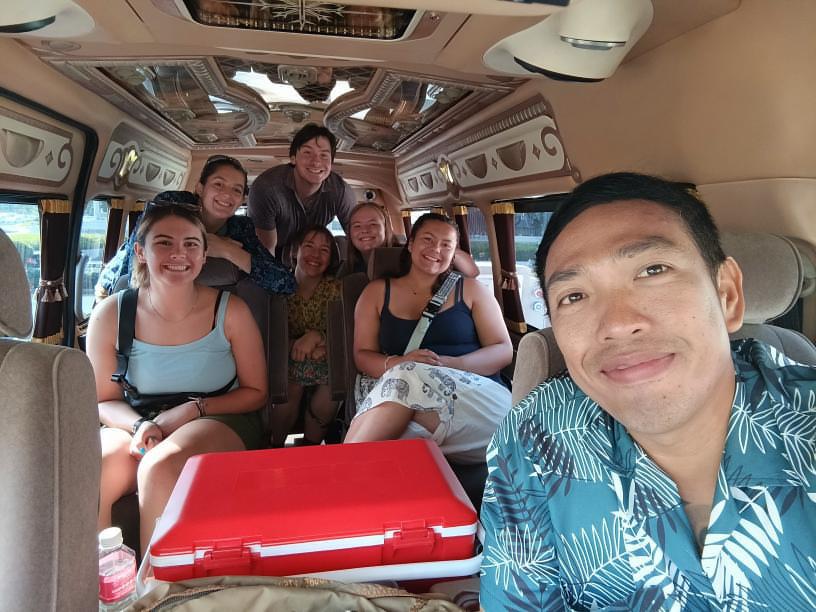
We arrived in Chiang Mai in the afternoon. We're staying in a young, artsy part of the city, near Chiang Mai University. Lots of restaurants, cafes, shopping, etc. Folks were able to get out and explore on their own yesterday. A group of us walked around the area near our hotel and then waived down some tuk tuks (one of the two primary modes of local transportation) to take us to one of the Chiang Mai night bazaars. The tuk tuk ride was definitely a highlight--such a cool way to experience a city! Tuk tuks are basically a high-powered moped with a passenger cart attached. The other option is a "songthaew," which literally translates to "two rows." It's a truck with two rows of covered seating in the back for passengers. Some songthaews' routes can be identified based on the color of the truck. 

Students and I taking a tuk tuk to the night bazaar

We met up with most of our students in the night bazaar for a few hours before heading back out to explore the city.

Day 12: Chiang Mai, Day 2

The theme of today is "there's been a change of plans..."

As a result of heavy rain, we were not able to drive into the mountains (dangerous windy, steep roads) to visit the Wat (temple) we had planned, so we had to pivot. We started the morning off at a silk factory, where we learned a little more about the silk making process--particularly about differences in quality of silk. This factory had high end stuff that was stunning...and also out of the price range of this lowly academic's disposable income :). Sorry Kjarsten, the silk robe will have to wait until next trip.


Video of Thai Silk Village

Bolts of silk--my mom would love this place (hi, Mom!)

You can feel the difference when touching the two shirts

We ate lunch at the Holiday Garden Resort, where it seemed like the buffet of food options were never ending! We hoped to make it to the Wat in the afternoon, but rain prevented that, so instead we visited an umbrella making factory (which was really cool to see the process of how bamboo umbrellas are made) and a fine jewelry store. 

Here's some info on the Umbrella Making Centre (directly from website):

  • One of the legends says that once Phra Kru Intha, the monk of Wat Bo Sang, went for a pilgrimage in the Tai Lue land near the Thai-Burma border [and] saw umbrella making. [He was] interested in bringing this knowledge to propagate to villagers to invent as a Buddhist worship and use for sun protection and rain protection.
  • 1757: After returning from a pilgrimage, Phra Kru Intha began to persuade the local villagers to find materials and equipment to try making umbrellas as recorded.
  • 1941: The villagers gathered together to form a cooperative called 'Bo Sang Umbrella Making Cooperative Limited Sin Chai'...[encouraging] people to make umbrellas of various sizes, including fabric umbrellas, paper umbrellas, and mix color with maca oil and apply it on the umbrella. for beauty and durability.
  • 1978: Mr. Thawin Buajeen, Buak Ped villager, Ton Pao Sub-district, a professional tour guide, saw that the umbrella making profession would be of interest to foreigners and should be preserved; he persuaded 12 villagers with umbrella making experience to offer demonstrations of how to make umbrellas at every step to preserve traditional arts and crafts and develop in quality.
  • 1982: The 1st Bo Sang Umbrella Festival was initiated by the Tourism Authority of Thailand, together with the villagers of Bo Sang to publicize the umbrella handicraft village...today, the Bo Sang Umbrella Festival is included in the annual tourism calendar. which will be held on the 3rd Friday of January and has 3 consecutive days of activities.
  • 2005: Established as Umbrella Center (1978) Co., Ltd. on August 2, 2005
  • 2006: With a long history of Bor Sang umbrella, as well as the source of production and the transfer of wisdom that has been inherited for more than 200 years, [the organization] applied for registration of the Bo Sang umbrella as an intellectual property of geographical indication.
  • 2009: To ensure the production of quality umbrellas in Bo Sang and continue the production to be more modern, products are developed with the Institute of Science and Technology Research (NSTDA), such as making wood ovens for use in the rainy season, reducing chemicals such as varnish thinners in wood coatings by finding other raw materials to replace for the good health of employees and the safety of consumers.
  • 2010: Researching the Lanna style of umbrella; making and adding Lanna patterns on the umbrella under the Lanna Collection project in collaboration with the Institute of Science and Technology Research (NSTDA).
  • 2018: Umbrella Making Center (1978) Co., Ltd. has been in business for 40 years and continues to carry on Lanna umbrella making craft to maintain this international local wisdom to remain with the people of San Kamphaeng District and Doi Saket District. Chiang Mai Province continues according to [do business according to the following mission]. "maintaining identity and the continuation of the handicraft of Bor Sang umbrella production to be a sustainable business with the local community.”
Students entering the Umbrella Making Centre

Making the umbrella frame out of bamboo

Students had an opportunity to walk through the different stations/phases of the umbrella making process

I am personally not an avid shopper, nor do I have any sense of style, so I didn't look too closely at the jewelry options (but I'm sure they were stunning...).

We got back to the hotel in the afternoon for free time. Some folks arranged for a Muay Thai lesson, and I tried to organize an outing to one of the local rock climbing gyms in town, but we didn't generate enough interest for the climbing gym today. But I'm happy to report that we *did* get enough interest for a visit to the climbing gym tomorrow morning :)

Students and Kathryn at their Muay Thai lesson. Photo credit: Kathryn

Tomorrow's agenda is also a little tentative, pending rain. We may explore the historic district ("Old Town") in Chiang Mai tomorrow afternoon, and then most of the group is planning on attending an official Muay Thai fight (first live commercial fight in Chiang Mai in 2.5 years!) tomorrow night.

Sunday, June 8, 2025

Thailand Days 18 - 19: Chiang Mai Strikes Back

(first part of this post written on 6/7)

I'm writing this blog post on my phone (blech!) on the way to Sukhothai from Lampang from Chiang Mai. Since my last post...

June 5 - Chiang Dao --> Chiang Mai

We left Chiang Dao early on the day of the 5th. A thing can be two things, and students seemed appreciative of the beauty and solitude of Chiang Dao, AND they were *ready* for the amenities of the Eastin Tan hotel and comfort of Chiang Mai. We had a student get stung by a scorpion around 12:30 on the last night in Chiang Dao--not serious (equivalent to a bee sting), but it also felt ironic to make it so close to the Chiang Dao finish line without any major critter crises...and then scorpion. The student was a trooper--glad you're okay.

We had some time before we could check into the hotel, so we stopped at the Chiang Mai handicraft village along Sankampang Road to visit the Umbrella Making Centre, the Thai Silk Village, and a new location for me: the lacquerware shop. I’ve written posts about the umbrella and silk shops, but I’m gonna drop some knowledge about lacquerware.

Learning about the umbrella making process. These umbrellas are made from santol wood

 Drying handmade paper that will eventually become the panels for the umbrellas

Variety of handmade umbrellas from all over the world

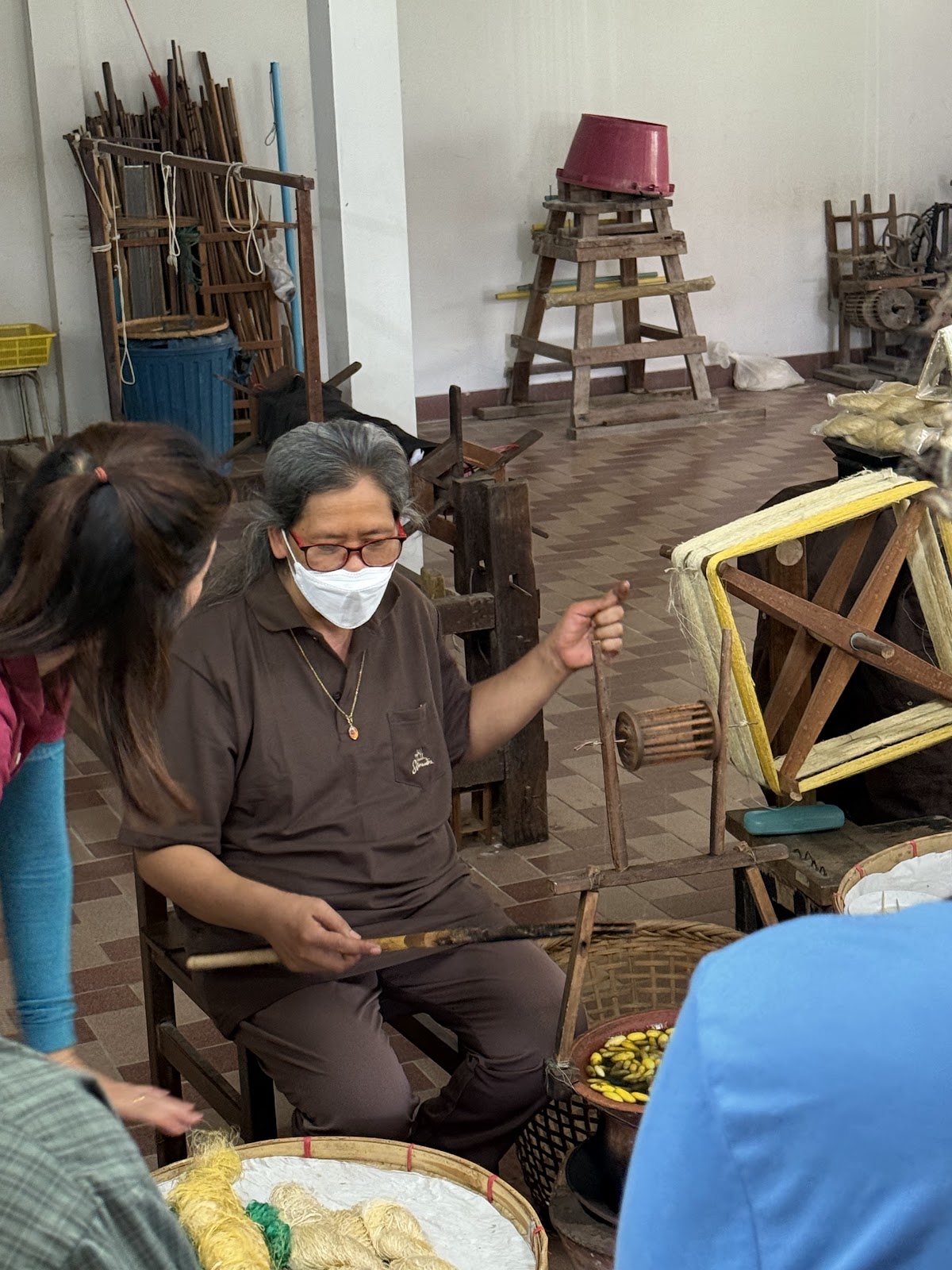
 Different parts of the silk making process. There are live silkworms in the bowl with the green plants

Learning about the difference between real and imitation silk. If you burn real silk, it smells like burned hair. If you burn fake silk, it smells like burned plastic.

Extracting silk from the worm

We went to Lai Thong Lacquerware. From the overlords:

Chiang Mai, the heart of the former Lanna Kingdom, boasts a rich heritage in lacquerware craftsmanship. This traditional art form has evolved over centuries, blending indigenous techniques with influences from neighboring regions.

Lacquerware in Chiang Mai dates back to the establishment of the Lanna Kingdom in 1296. Artisans utilized local materials such as bamboo and wood, coating them with resin from trees like Melanorrhoea usitata to create durable and decorative items. These items ranged from everyday utensils to ceremonial objects, reflecting both functionality and artistry.

A distinctive technique known as lai rot nam (ลายรดน้ำ), or gilded black lacquer, became prominent. This method involves applying black lacquer to an object, painting designs with a water-soluble gum, overlaying it with gold leaf, and then washing it to reveal intricate gold patterns against the black background. This technique reached its zenith during the Ayutthaya period and continued to be refined in subsequent eras.

Over time, Chiang Mai’s lacquerware incorporated influences from Burmese styles, especially in the use of colored lacquer and etched designs. The craft has been preserved through generations, with artisans adapting traditional methods to contemporary aesthetics.

Located on San Kamphaeng Road, often referred to as Chiang Mai’s “Handicraft Highway,” Lai Thong Lacquerware Emporium is renowned for its high-quality lacquerware products. The emporium showcases a wide array of items, from traditional designs to modern interpretations, reflecting the rich heritage of Chiang Mai’s lacquerware craftsmanship.

Visitors to Lai Thong can witness the meticulous process of lacquerware creation, gaining insights into the techniques that have been honed over centuries. The emporium serves as both a retail space and a cultural experience, offering a glimpse into the enduring legacy of this traditional art form.

I wasn’t able to get a lot of photos in the emporium because they had a hard photography embargo, but I will say that the lacquerware was beautiful…and pricy! Apparently the cost of gold has more than doubled over the past several years, which would also impact this industry.

source: goldcost.org

Learning about the lacquerware process

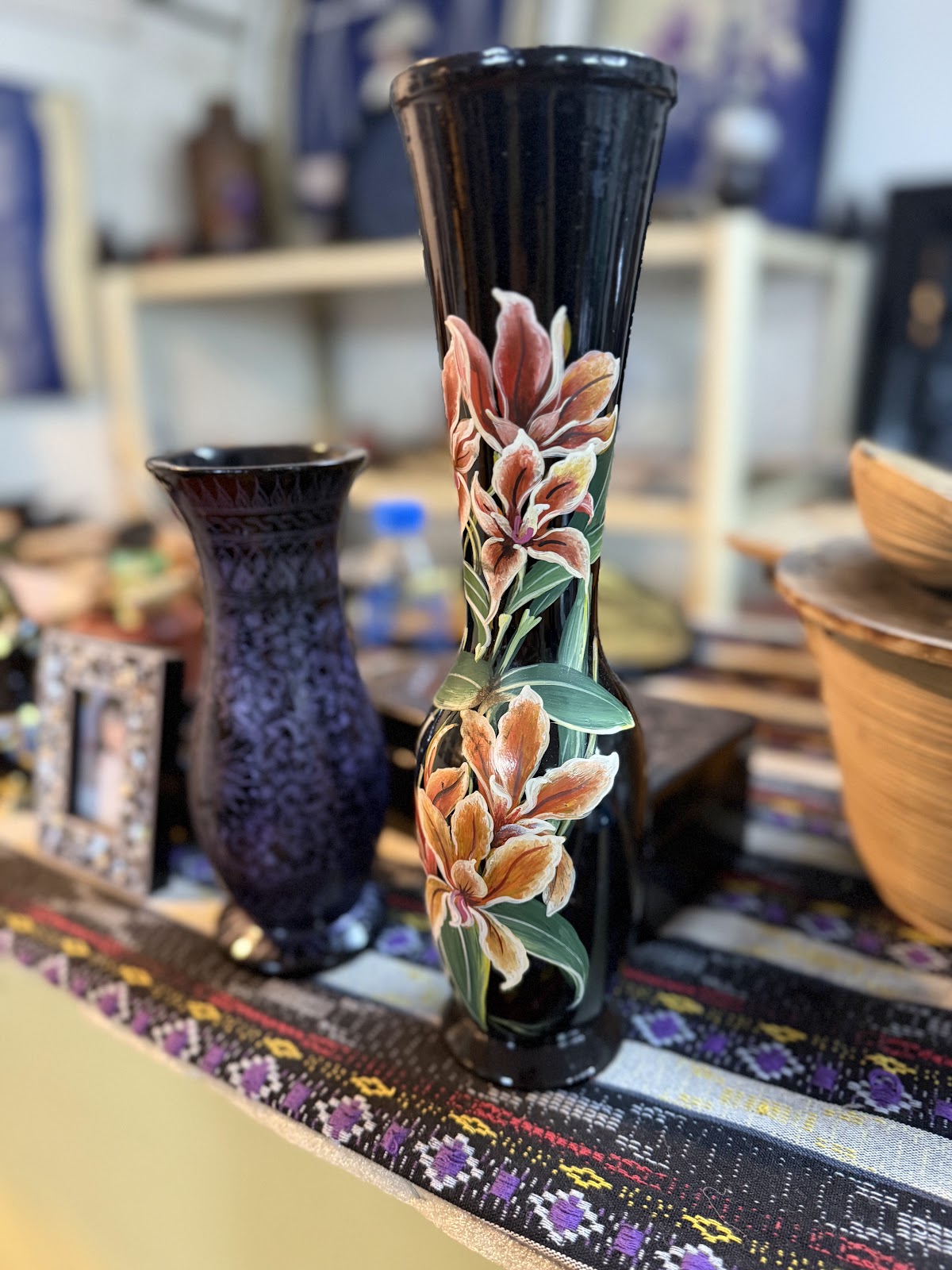
Example of handpainted product

We got to the hotel, we met up with Cory, who used his extra day in Chiang Mai to raft the Mae Taeng River with 8Adventures. Check it out!

Photo credit: 8Adventures

Photo credit: 8Adventures

Photo credit: 8Adventures -- Cory's getting to guide!

Cory and I went for a run to Chiang Mai University, and then everyone ate dinner as a large group at The Pizza Company—not my personal cup of tea, but students were ready for pasta, pizza, and fried chicken, and their joy brings me joy :)

6/6: Free day in Chiang Mai

The next day was a free day in Chiang Mai, and students had options to join me for a hike and gastronomy tour, Han for a history and culture tour, or do their own thing. Students had a great time exploring Chiang Mai, and they participated in a wide variety of experiences. I asked students if they’d be willing to share photos, a recap, and an image of a Willy Wonka Overlord to describe their day:

From Lily and Isabel:
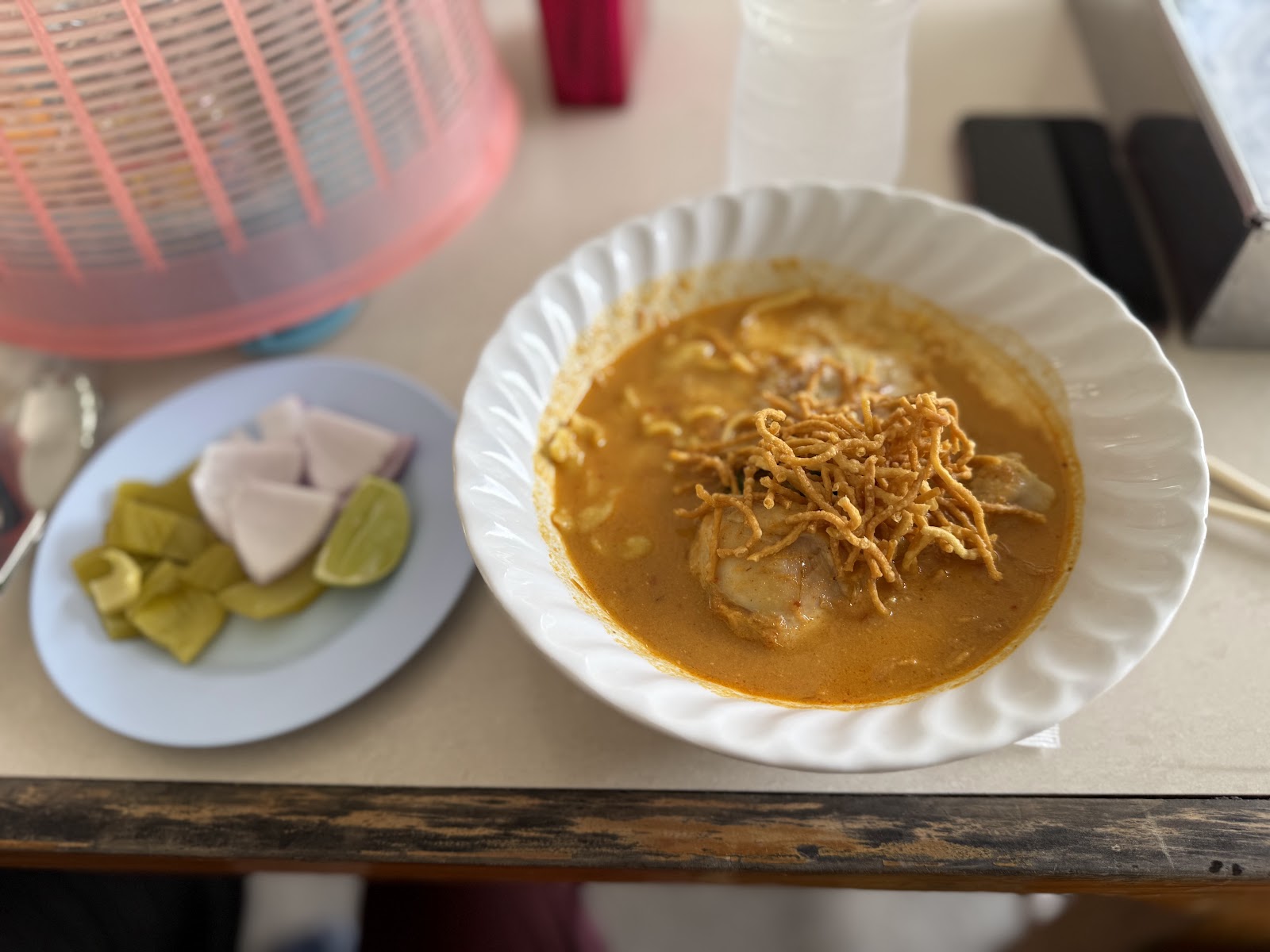
We wandered around Chiang Mai with Han, Liv, Lindsey, Sienna, Mia, Collin, and Kale for most of the day which was super fun!! We visited a bunch of different wats in the morning - Wat Umong (700 years old!), Wat Sri Suphan (made out of hammered silver), Wat Chedi Luang (in the heart of Chiang Mai’s Old Town) and a couple other small ones. Ate some amazing khao soi for lunch and swam at the hotel for a bit after our adventures, then went to dinner at the best Burmese style restaurant with Kellie, Cory, Lily T. and Anna. Wandered through some night markets and “forbidden” hideaways afterwards — a great last day in Chiang Mai!

Source: ChatGPT

 Photo credit: Isabel and Lily

 Photo credit: Isabel and Lily

 Photo credit: Isabel and Lily

 Photo credit: Isabel and Lily

 Photo credit: Isabel and Lily

 Photo credit: Isabel and Lily

From Keller:
George and I walked from the hotel to the historic city during our free day. No plan in mind, simply just walking around and discovering whatever we find. We stumbled upon the cultural center, which we then bought tickets for and viewed, which was interesting. My favorite part was seeing the mini displays of what life looked like back then. I also enjoyed seeing the small amount of Karen history that was featured in the museum. After that, we walked around the central wat in the old city. We talked to some Thai people and I got a lesson as to what the blessing I got meant, and when I’m supposed to take it off (on odd numbered days). Overall, very interesting day and very tiring!

Photo credit: Keller

Photo credit: Keller

Photo credit: Keller

Photo credit: Keller


From Izzy and Lily:
We drove up to the longest zip line in Thailand and convinced Boi (one of our drivers) to join us! We got to zip line to the song "I believe can fly", and go cart to some amazing Mario music! It was genuinely such a great experience!

Source: ChatGPT

Photo credit: Lily and Izzy

Photo credit: Lily and Izzy

Photo credit: Lily and Izzy

Photo credit: Lily and Izzy

From Collin:
Source: ChatGPT

From Mia:
Source: ChatGPT

I gotta say, the overlords ARE getting more whimsical.

My free day:

Source: ChatGPT

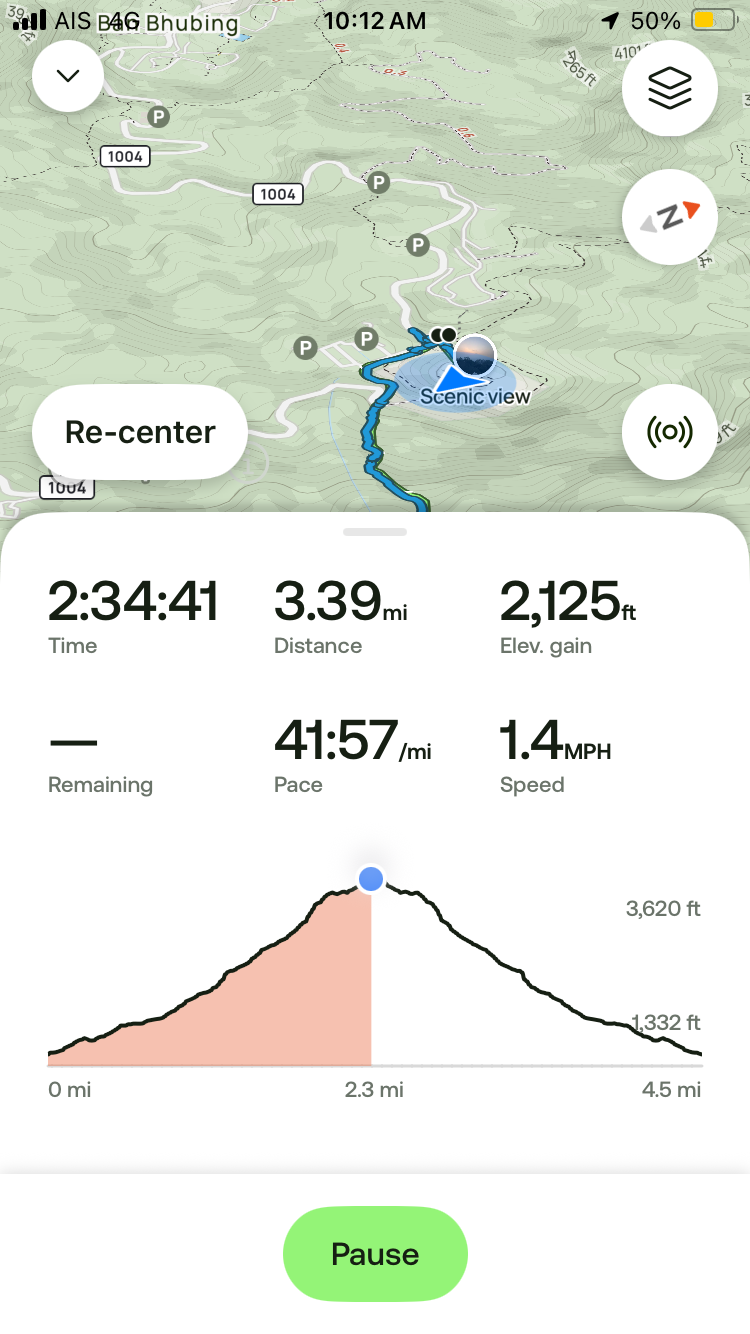
I spent my Chiang Mai free day accomplishing something that's been on my Thailand bucket list for a few years--hiking the Monk's Trail, a trail to Wat Pha Lat, which was the foot-route monks took to reach What Phra That Doi Suthep before the construction of the road in 1935. Wat Pha Lat served as a resting place for monks en route to Doi Suthep for many years.

I put the offer out to the group to join Cory and me for the hike / return to Doi Suthep, and Matt was brave enough to 1) do the hike and 2) spend the morning with us--and we were so glad he did! While it's not a long hike, it is a burly hike in elevation gain: 2,100+ feet in 3 miles. We left the hotel around 7:30, grabbed a tuktuk, and were dropped off at the trailhead to begin our adventure quest.

Taking a tuktuk to start our adventure quest

Doesn't count unless it's on AllTrails or Strava

Doesn't count unless it's on AllTrails or Strava

Start of the trail

After reviewing my photos of Wat Pha Lat, I'm tremendously disappointed in my inability to take a single photo of the overall temple grounds--they were truly stunning and very peaceful. One of the more unique wats I've had an opportunity to visit. I also have no context for these photos...blog fail.

Wat Pha Lat

Wat Pha Lat

Wat Pha Lat

Wat Pha Lat

Wat Pha Lat

Wat Pha Lat

Wat Pha Lat

We spent about 20-30 minutes exploring Wat Pha Lat before continuing up the "trail" to Doi Suthep. It is evident that most folks stop at Wat Pha Lat and either head down the mountain or hail some sort of wheeled vehicle to go the rest of the way because the second part of the trail was gnarly, but in a fun way. I think we had pitches of 35-45 degrees at point. I definitely ended up in the all-hands-all-feet scramble position at least once or twice. We made it to Doi Suthep and spent about 45 minutes at the Wat (I covered this one in a previous post) before hailing a songthaew to take us back to the hotel.

We said goodbye to Matt and grabbed Bianca and a songthaew to the old city for lunch at Khao Soi Khun Yai, were we met up with Han and a group of students for some delicious khao soi. Bianca, I owe you a photo of our lunch adventure but I think they are all on Cory's phone...

Khao Soi Khun Yai

A few students and we went back to the hotel for some R&R before venturing back out for dinner. Cory and I got some mango sticky rice, a massage from the Artist Spa, and watched NBA finals highlights at the hotel pool. Solid afternoon.

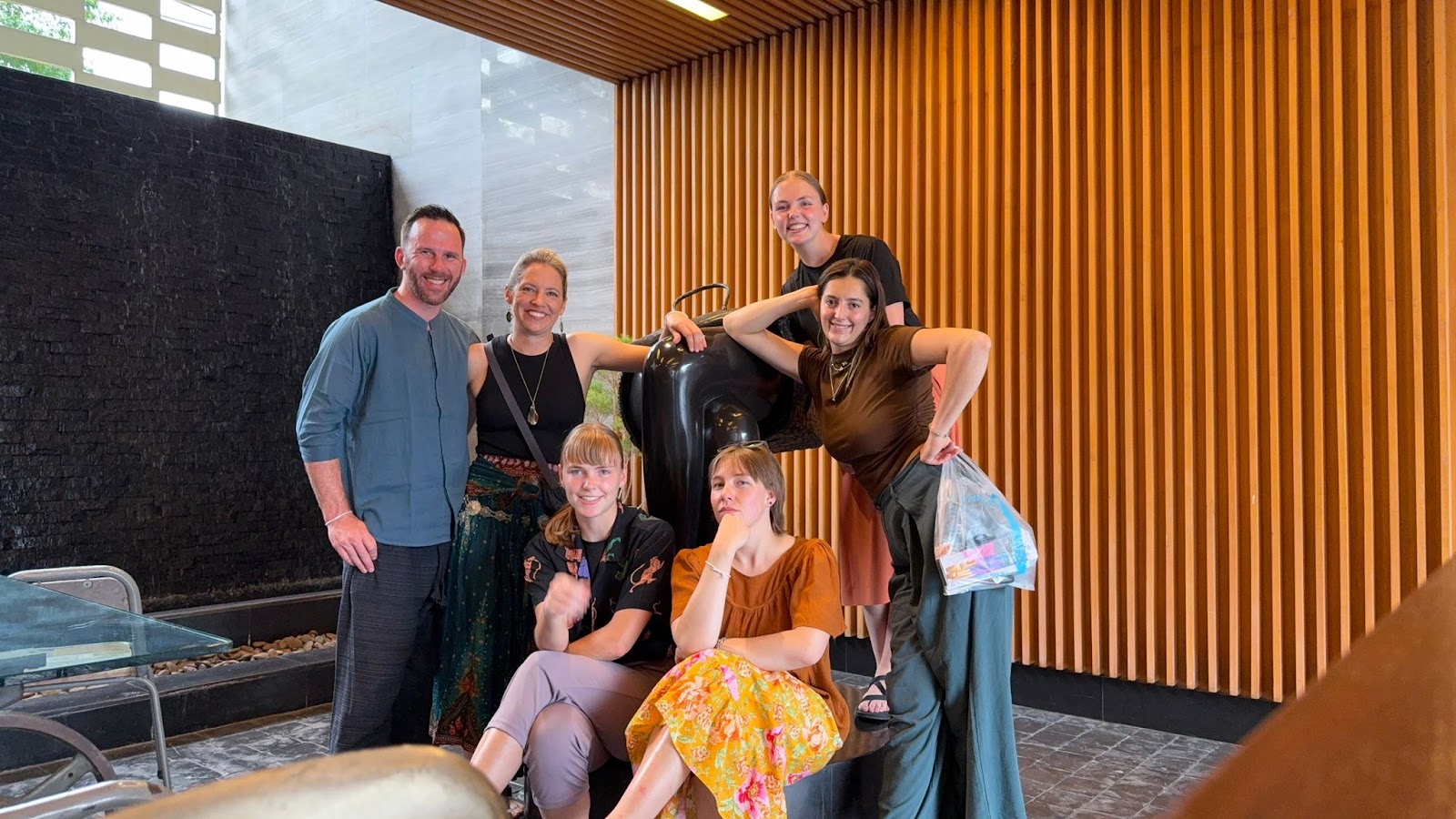
6 of us returned to Tom Teng Toh. I do not need to belabor how much I love this restaurant. We had a fantastic family style meal, and as per usual, I did not get a single group photo of us at dinner. But I do have one pre-dinner?

The dinner group

We said goodbye to the students after dinner, and then Cory and I set out to the Mellowship Jazz Club to visit James (who Han and I met and have been friends with for 5 years!). James just left FB to manage Mellowship.

Little do I know that I'm about to go careening off a gastronomic cliff where everything I believed for years turns out to be a lie. FOOD DRAMA.

Cory and I walked to Mellowship, ordered a beverage, and waited for James to return from dinner so that I could introduce them and hear about James' experience at Mellowship thus far. The conversation turned to dinner plans, and we shared how much we liked TTT. James' response was, "Oh yeah, I know of that place, but it's overpriced so most locals don't eat there very much. You should check out Maha Larb CNX instead. Open until 3AM and great northern Thai food."

Y'all. Cory and I had already had dinner and walked 25,000 steps on the day, which included the Monk's hike and also bee-bopping around in crappy dress flats because I decided that today was the day I should look *fancy*. 

Doesn't count as exercise unless you publicly track it

It was 11:30PM and we were tired as hell. And I WILL BE DAMNED IF I AM NOT GOING TO TRY THAT RESTAURANT BEFORE LEAVING CHIANG MAI AND POSSIBLY THAILAND FOREVER (I mean, that's worst case scenario. I really hope to be back!). 

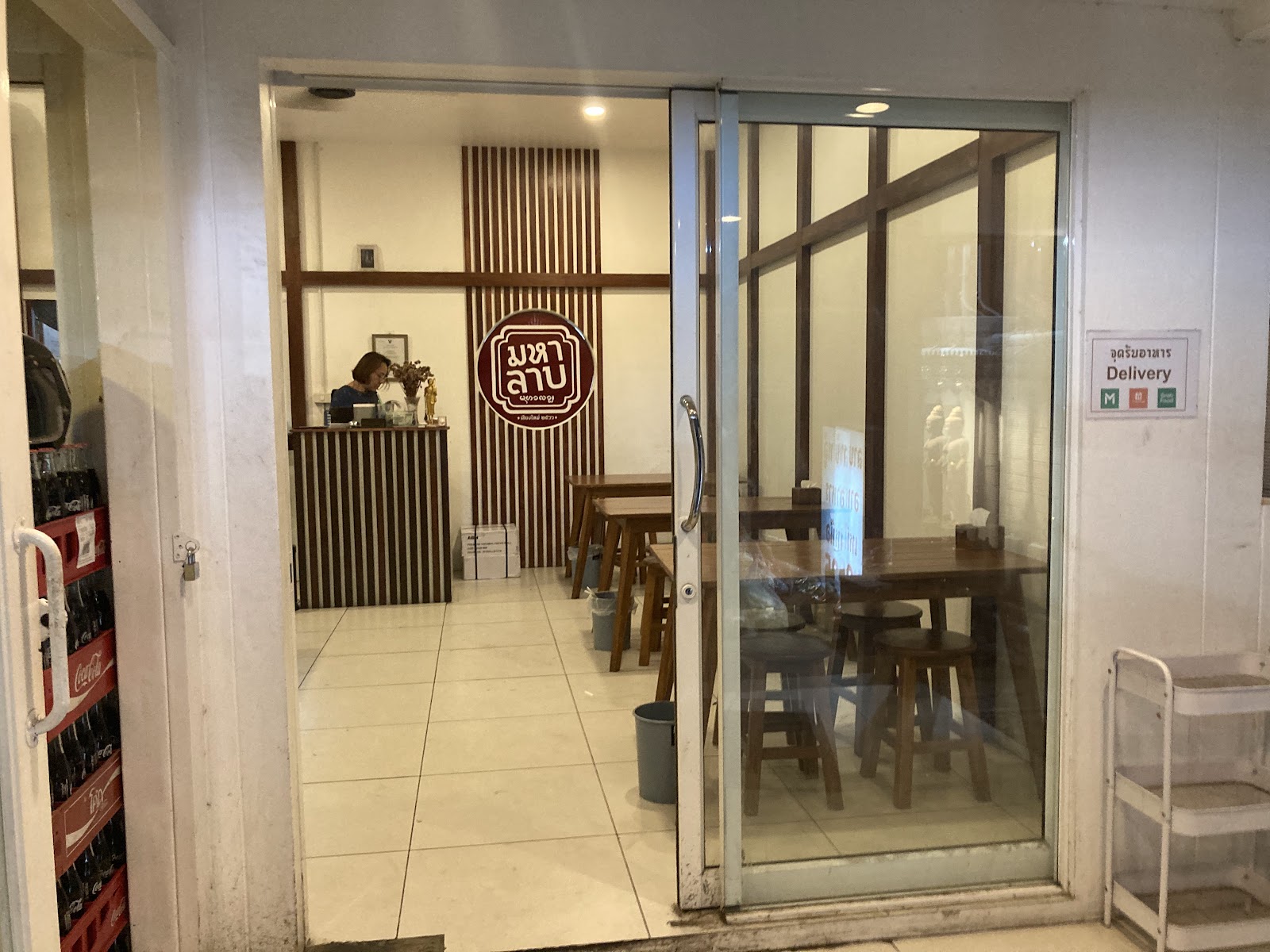
We trudged our way back over to Nimman to find Maha Larb CNX. It is a total no-frills restaurant and IT IS 1/5 OF THE PRICE OF TTT. 1/5th. 20%. I could have been swimming in Northern Thai Style Pork Curry.

Maha Larb CNX

Maha Larb CNX

Maha Larb CNX


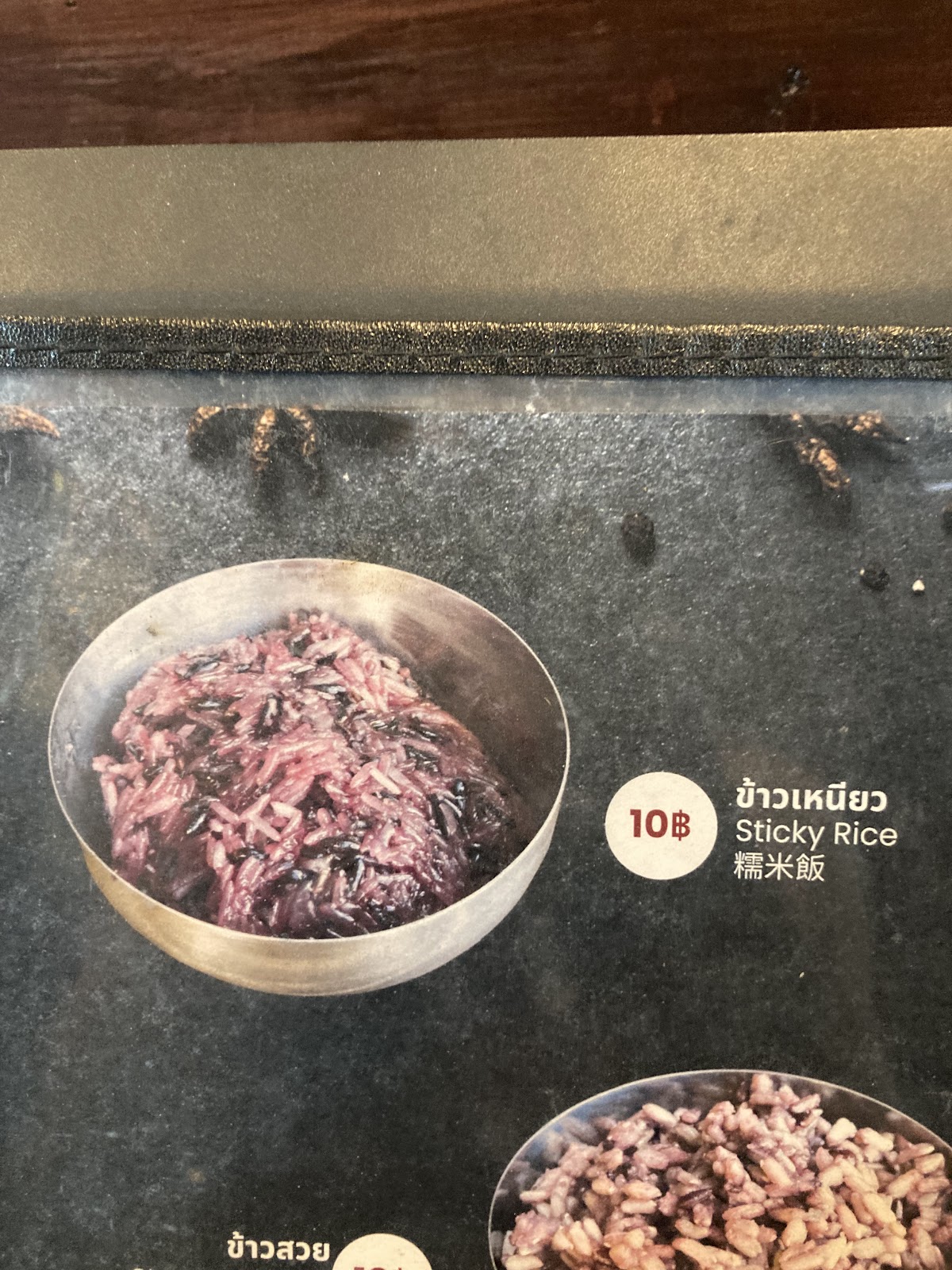
Naturally, I took a picture of the menu but not of the actual food. Trust me, it was delicious. For the next MTSE Thailand trip, add this to your gastro tour.

Okay, I think this post is long enough. I'll cover Lampang and Sukhothai in my next one. Cheers!

Oh, and clipping. We should probably cover clipping in the next post.